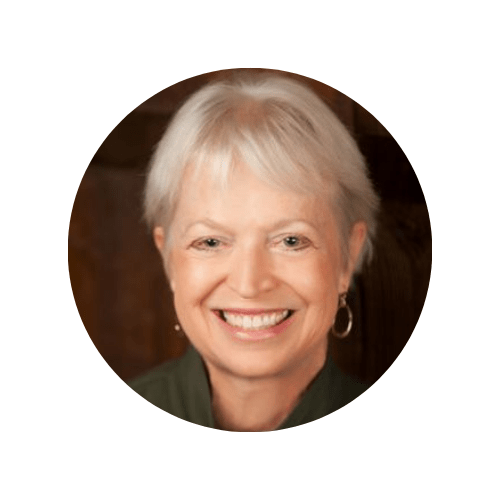
Dena Rod is a writer, editor, and poet based in the San Francisco Bay Area. A graduate of San Francisco State University, they have a M.A. in English Literature. Their debut poetry collection Scattered Arils is now out from Milk & Cake Press and in its third printing. Rod’s literary endeavors include curating poetry showcases, speaking on panels, and visiting classrooms for community engagement with a focus on queer and trans Iranian diaspora issues. They ran the RADAR Productionsweblog, were the former Creative Nonfiction Editor at homology lit, and the former Managing Editor of Argot Magazine, a Webby-nominated queer non-profit. In 2020, they were selected to tour with Sister Spit, debuted the chapbook swallow a beginning, and joined The Rumpus’ Features Team. They’re a fellow of RADAR Productions’ Show Us Your Spines Residency, Kearny Street Workshop’s Interdisciplinary Writer’s Lab, and Winter Tangerine’s Summer Writer’s Workshop.
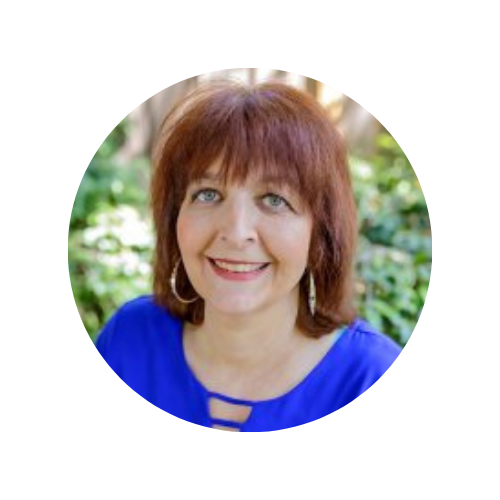
Persis Karim is poet, editor and professor of World & Comparative Literature at San Francisco State University. She holds the Neda Nobari Endowed Chair and serves as director of the Center for Iranian Diaspora Studies. Her poetry has been published in numerous journals including: Callaloo, Reed Magazine, The Raven’s Perch, and The New York Times. She is the editor of three anthologies of Iranian diaspora literature and is glad to be tending to her own poetry manuscript, Accidental Architecture, which was selected a finalist for the Catamaran Review Prize in June 2019.
Persis featured in the Peninsula Virtual Bookfest co-hosted by the San Mateo County Libraries; and in “Empower Women, Empower Earth: Poetry Reading & Panel Discussion” hosted by Skyline College.
Poem on Belonging
ANTHEM
To stand in one place and shelter
against the invisible and unknown
is to stop the rolling wheel of my heart,
seeking the next road, the next eye
full of beauty. I was not meant to be fearful—
to hold my love inside, indoors, like a captive
waiting to be unchained. I live for molecules
and patterns, the architecture of a flower,
the flight and song of sparrow, gull, cormorant,
each animal and tree an anthem—
the only true thing I want to abide.
She didn’t seem to notice how the squash seeds on the counter took over. They were the first to invade the area around the kitchen sink. Later, grape, tomato, eggplant seeds and fava beans found their way onto a cutting board or on a small dish. When we tried to move or discard them, she balked and told us she would move them. Small jars and glasses began to appear: sprig of thyme, twig of red begonia, elbow of spearmint. She guarded them as if they were her children. Outside, under the Madrone that she took as a sapling on a walk in the hills with my father She built a make-shift nursery. Under the tree’s filtered shade, she cultivated seedlings of every sort: annuals, perennials, cuttings of pomegranate, fig, lemon. She had no desire to buy plants— they spoke to her, greeted her as if she were a fairy sent to rescue and cajole them into future seasons.
I see now how seeds a way for her to belong. She was making a home — giving us and them roots. This was her habit— a way to propagate while she inhabited the world Sometimes walking with her in the neighborhood, we shrank as we passed a neighbor’s house where she had snipped a cutting, or crossed their property to pick seeds or pods —Lilac, Salvia, Ceanothus, Oak. It mattered not whether they were tree or bush, native or exotic. To her they all belonged equally in her garden.
Now, I find myself with pockets full of seeds. Last week red clover, this week rattlesnake grass. And after the yellow lupine pods harden, I’ll gather those too. Some people think of this as stealing or poor man’s gardening, but it is my duty. I remember her holding acorns in her right hand, my palm in her left. Like a bird, she moved life across time and space, making things come alive. She believed in giving plants a place to rest after the exertion of a bloom. She understood the hard seed of hope that must realize its possibility. I know this need I to cultivate beginnings.
Eileen R. Tabios loves books and has released over 60 collections of poetry, fiction, essays, and experimental biographies from publishers in ten countries and cyberspace. Publications include the long-form novel DoveLion: A Fairy Tale for Our Times; the form-based Selected Poems, The In(ter)vention of the Hay(na)ku: Selected Tercets (1996-2019),THE GREAT AMERICAN NOVEL: Selected Visual Poetry (2001-2019), INVENT(ST)ORY: Selected Catalog Poems & New (1996-2015), and THE THORN ROSARY: Selected Prose Poems & New (1998-2010); the first book-length haybun collection, 147 MILLION ORPHANS (MMXI-MML); a collection of 7-chapter novels, SILK EGG; an experimental autobiography AGAINST MISANTHROPY; as well as one book translated into French and three bilingual and one trilingual editions involving English, Spanish, Thai, and Romanian. Her award-winning body of work includes invention of the hay(na)ku poetic form as well as a first poetry book, Beyond Life Sentences (1998), which received the Philippines’ National Book Award for Poetry (Manila Critics Circle). Her poems have been translated into 11 languages as well as computer-generated hybrid languages, paintings, video, drawings, visual poetry, mixed media collages, Kali martial arts, music, modern dance, sculpture and a sweat shirt. Additionally, she has edited, co-edited or conceptualized 15 anthologies of poetry, fiction and essays as well as exhibited visual art and visual poetry in the United States and Asia.
Alan Chazaro is the author of This Is Not a Frank Ocean Cover Album (Black Lawrence Press, 2019), Piñata Theory (Black Lawrence Press, 2020), and Notes from the Eastern Span of the Bay Bridge (Ghost City Press, 2021). He is a graduate of June Jordan’s Poetry for the People program at UC Berkeley and a former Lawrence Ferlinghetti Fellow at the University of San Francisco. He writes for SFGATE, KQED, Okayplayer, and 48 Hills, and is on Twitter and IG being a useless pocho millennial as @alan_chazaro.
Poem on Belonging
SELF-PORTRAIT AS AMERICAN
I say fuck
because it feels right
about now,
and I say love because
what wrong
could it bring?
I haven't shot a pistol
since my stepdad
flung his Desert Eagle
from the bedroom and took us
to burst freedom as kids.
The smell of sulfur
and devil, the pinch
of steel between my 10-
year-old finger. I didn't
seek this, was never good
at hitting body-
sized targets,
kept my eyes
shut while I curled
the trigger. It's heavier
than you think,
to hold and re-
lease thunder.
Not like the movies but
somehow like the movies.
Ears still ringing,
vibrations
in my bones.
Tongo Eisen-Martin is a poet, movement worker, and educator. His curriculum on the extrajudicial killing of Black people, We Charge Genocide Again, has been used as an educational and organizing tool throughout the country. His books include,Someone’s Dead Already (Bootstrap Press, 2015),Heaven Is All Goodbyes (2018 California Book Award and 2018 American Book Award), and Blood on the Fog: Pocket Poets Series No. 62 (City Lights, 2021). He is San Francisco’s eighth poet laureate and the co-founder and editor of Black Freighter Press.
Connie Post is a San Francisco Bay Area Poet. She served as the first Poet Laureate of Livermore, California from 2005 – June 2009. During her term, she created two popular reading series “Wine and Words” and “Ravenswood”. She wrote 25 poems for civic and community events. The City of Livermore published this collection entitled In a City of Words.
Connie is an award winning poet, and the author of over ten collections of poetry. In 2012, her chapbook, And When the Sun Drops, won the 2012 Aurorean Editor’s Choice Awards. Her first full length collection, Flood Water, was released by Glass Lyre Press in 2014 and won the Lyrebird Award. Connie’s most recent collection, Prime Meridian, was released in January 2020 (Glass Lyre Press). Prime Meridian was a finalist in the International Book Awards, the Best Book Awards and the American Fiction awards. It was also selected as a Distinguished Favorite in the 2022 Independent Press Awards.
She has taught poetry workshops at Book Passage, Sebastopol Center for the Arts and many other venues. She has served as the keynote speaker at several Bay Area Literary events.Connie Post has been an advocate for autism for many years. She has presented to many local community colleges and groups on the subject of parenting and advocacy. Her podcast about having a son with severe autism was on a podcast, “Nobody Told me”, in early 2020.
Thomas Stanton is the 2018-2020 Benicia Poet Laureate. Born to a writer and an artist, he grew up writing poetry and now he and his wife Christine own Bookshop Benicia, the city’s literary hub. He has been involved in Benicia’s First Tuesday Poets group since 2004. Tom is one of a very few Poet Laureates in California who is almost entirely performance-based.
Shikha (Saklani) Malaviya is a poet, writer & publisher, born in the U.K. and raised in Minnesota and India. Her book, Geography of Tongues, was launched in December 2013, in India, to acclaim and featured in the Bangalore Literature Festival, Times of India Literary Carnival, Poetry with Prakriti & other festivals. Shikha is publisher & co-founder of The (Great) Indian Poetry Collective, a literary press.
Shikha’s poetry has been nominated for the Pushcart Prize and published in journals and anthologies such as Catamaran, Plume, Prairie Schooner, and Choice Words: Writers on Abortion. She is passionate about poetry & social change and involved in the poetry community through events/initiatives such as: crowdsourcing a poem on solar energy with Greenpeace India; writing a poem for Sankara Eye Foundation’s eye donation campaign; organizing ‘100 Thousand Poets for Change—Bangalore’, in 2012 and 2013; co-founding ‘Poetry in Public India,’ a movement to bring powerful verse by Indian women to public places across India; giving a TEDx talk on ‘Poetry in Daily Life’ at TEDx Golf Links Park, Bangalore, 2013. Shikha has been a mentor for AWP’s Writer to Writer program for six seasons and was AWP’s Kurt Brown Prize poetry judge in 2020. She was selected as Poet Laureate of San Ramon, California in 2016. Currently Shikha is a Mosaic America Fellow committed to cultural diversity and artistic excellence in the San Francisco Bay Area and beyond.
Shikha graduated from the University of Minnesota with degrees in liberal studies, creative writing and mass communications. She currently lives in the San Francisco Bay area with her family.
Ronnie Holland served as the City of Dublin’s First Poet Laureate (May 2008-2010), writing many “poems of place,” hosted poetry readings, and read at other events, dedications, schools and for Hope Hospice. She has been published in anthologies, newsletters, and two Ekphrasis chapbooks with artist Lily Xu. She continues to attend and read at regional poetry events, including the 13th Annual Mendocino Spring Poetry Event in Little River, and the state-wide gathering of California Poets Laureate in southern California October 2018.







 Speak Poetry in San Mateo County