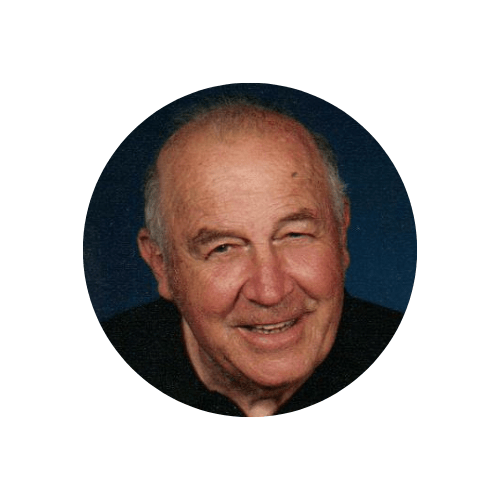
Paul Fericano 

In 1976, San Bruno poet Paul Fericano founded the SMALL PRESS RACKS IN LIBRARIES project (SPRIL), funded by the National Endowment for the Arts. In the peer-reviewed article by Fericano published in The Serials Librarian, he “explains how Small Press Racks, installed in 10 California libraries, are proving to be one of the most successful approaches toward reaching the reading public.”

Out of the 10 California libraries where Small Press Racks were installed, 9 were based out of San Mateo County: Atherton Library, Belmont Library, Brisbane Library, Burlingame Library, Foster City Library, Half Moon Bay Library, Millbrae Library, Pacifica Library and Woodside Library.

Fericano is a poet, satirist, social activist, and editor/publisher of Yossarian Universal News Service, the nation’s first parody news syndicate, founded in 1980. His poetry and satires have appeared in numerous publications and media outlets in the United States and abroad since 1971, including The Realist, The Best American Poetry, Saturday Night Live, The New York Quarterly, Mother Jones, 2 Bridges Review, Krokodil (Moscow), Punch (London), Charlie Hebdo (Paris) and Satyrcón (Buenos Aires). He is the author of several books of poetry, including The Hollywood Catechism (Silver Birch Press, 2015), and Things That Go Trump in the Night: Poems of Treason and Resistance (Poems-For-All Press, 2019), winner of the 2020 Bulitzer Prize. Fericano is a survivor of clergy sexual abuse and an advocate for other abuse survivors. He served as director of the nonprofit Instruments of Peace / SafeNet from 2003-2013, and his essays on the healing process are archived and available on his blog, A Room With A Pew.

Read Paul Fericano’s poem on belonging, “I Am Sicilian“.
Download SMALL PRESS RACKS IN LIBRARIES by Paul Fericano (1977), The Serials Librarian, 1:2, 135-138, DOI: 10.1300/J123v01n02_04

Noelia Corzo 

Supervisor Noelia Corzo made history as the first Latina elected to the San Mateo County Board of Supervisors and is a single mom, daughter of Guatemalan immigrants, and bilingual Spanish speaker. She was twice-elected Board Trustee of the San Mateo-Foster City School District. She has worked as a social worker, foster youth advocate, and community organizer. She studied Sociology at Cañada College and San Francisco State University, obtaining her A.A. and B.A. degrees. She lives in San Mateo with her son, Mikey, and her dog, Quetzi.

Poem on Healing

I’VE BEEN WAITING.

I have been waiting to meet you all my life. Your eyes; so beautifully brown and joyful. The strength of your will; completely unshakable. Your dedication to lighting other people’s darkness; undeniable. I remember the days you loved so hard but didn’t know how to let yourself be loved. Your eyes are no longer empty and sad. There’s now a fire there. One I always knew was there. The embers slowly burning just waiting for a gust of wind strong enough to light it up. I know that fire set you free. It burned down all those walls you thought were unbreakable. Everyone who told you that those walls were there for your own good was wrong. They never understood the person you were or the person you were meant to be. Maybe they never will and though that pains you, letting it go has pushed you towards your destiny. A destiny more incredible than any you ever imagined for yourself. One that was always yours. I see you so clearly now. Looking in the mirror never felt so good.

Copyright © Noelia Corzo. Used with permission of the author.

James O. Clifford, Sr.

James O. Clifford, Sr. spent 40 years in journalism, a span split between United Press International and the Associated Press. He was the broadcast editor at the AP’s San Francisco bureau when he retired in 2000. His honors include the San Francisco Press Club feature writing award and UPI’s Excellence in Broadcasting award. He is the author of Philip’s Code: No News is Good News – to a Killer, a murder novel built around the changes in news reporting he witnessed during his career. Since retiring, his byline has appeared in the San Mateo Daily Journal, where his “Rear View Mirror” history column runs twice a month, Climate Magazine, The Journal of Local History and La Peninsula magazine. He is a graduate of San Francisco State University, where he met his wife, Peggy. The two were married in 1962 and live in Redwood City. They have seven children.

Poem on Belonging

DON’T CALL ME “ANGLO”

Don’t call me “Anglo.”
I won’t hear you.
You’ll be white noise.

I’m the Irishman, the paddy who played the “Irish banjo.”
Built railroads, dams, bridges.
Fought your wars.
Willing to die so we could apply.

I’m the Italian.
The “Luigi” you made fun of. 
The “wops” hanged in New Orleans.
I built Stanford block by sandstone block.
And all you thought I brought was pizza.

I’m French.
Detroit, St. Louis, Louisiana.
We want our land back.
The border crossed us.

Pollack, Bohunk and Jew.
We spoke Polish and Yiddish
But called English the mother tongue.
We learned from her.
And moved up rung by rung.

We’ve all vanished into the great pot.
Not to be seen again.
Don’t ask, don’t tell.
Mixed and shaken until white – white without privilege
That’s all right.
Just don’t call us WASP or Anglo
Call us American.

Copyright © 2022 by James O. Clifford, Sr. Used with permission of the author.

Tanuja Mehrotra Wakefield 

Tanuja Mehrotra Wakefield’s poems have been published in numerous journals and anthologies. Her first book, Undersong, was published in 2019 by FutureCycle Press. She has an MFA in Creative Writing from San Francisco State University, an MA in English from Tulane University, and a BA in English from Wellesley College. She has taught poetry to elementary school students as a California Poets-in-the-Schools instructor. She lives with her family in Belmont where she served as Poet Laureate from 2015 to 2018 and founder of the Belmont Poetry Night. She works as an editor for an education technology company.

Poem on Belonging

ELEGY FOR DEERWOOD

The cicadas hum in the heat as I walk the old neighborhood,
along Windward Way West and Holly Ridge Road, past the country club 
my parents never dined in, the tennis courts they never served on.

I grew up among golf carts and security guards, swayed 
to air conditioners and ice makers, but the Florida wild 
was always close: a pink-throated lizard clinging to a window screen. 

I will not choose between the aunty stirring tea, the possum on the porch, the blue-haired lady in her Cadillac. Everything has made me: the pungent armadillo scratching the front door, Victor’s hand on my thigh.

Waves of heat wash over my daughter and me as we stumble
on a squirrel carcass near a manicured hedge. We crouch down to peer at the body of bones, grass sprouting through the eye sockets as the cicadas crescendo: 

The carpool van blaring “Who Are You,” on Rock 105, fur and a flake of skin on the rodent’s serpentine tail, running through the dunes, pool parties and potlucks, a skull licked clean into a smooth white, reading Wordsworth beside man-made lakes, mirrors of blue sky and pine, bullfrogs hidden in sneakers, visits from family in India, Elizabeth treating me to cherry cokes at the club, a trail of ants across the ribcage, hissing mailboxes, graduations, rolling green, tennis courts, bridal showers, insect wings, baby showers, boys I never kissed, breaking glass, roller-skating on driveways, lawns wet with pesticides, warm rain 
among the crickets, 		crickets, 		crickets. 

NOTE: *Deerwood is a gated community in Jacksonville, Florida where I grew up. It’s very quiet and green with large stately homes. We were likely one of the first Indian immigrant families to move into the community. Our family tended to keep to ourselves. We never took part in the amenities a gated community offers—like golfing and dining at the club. My parents never felt they belonged in such places. However, they still live in Deerwood in a home that holds many family memories. Whenever I visit them, I take long walks there, and those memories always wash over me and make me think of how we can simultaneously belong and not belong where we live. 

Copyright © 2019 by Tanuja Wakefield. Used with permission of the author.

Find Tanu’s book in the library!

Undersong (2019)

Poet Laureate Project

Appointed by the Council of the City of Belmont in 2015, Tanuja Mehrotra Wakefield served as Belmont Poet Laureate through 2018, and founded the Belmont Poetry Night.

Virgil Rose 

Virgil Rose is an electrical engineer who was raised in Fresno and has lived in the Bay area for the last 50 years.  He started writing poetry 25 years ago and he has self-published three poetry books.

He currently lives with his wife of 50 years in Foster City. Virgil earned a BS in Electrical Engineering from Fresno State University and an MS in Electrical Engineering from Santa Clara University.  He is retired and his hobbies include poetry, photography, and his two grandchildren who live in Pacifica.

Poem on Belonging

FORGOTTEN

Where have the fruit trees gone?
Pruning ladders — missing rungs
are scattered among the few remaining trees
while fruit pits are blanched in the searing sun
remembering the colonies of ants
who once marched single file across the orchard.

Fertile hosts once lined the road,
skyward limbs bowed with fruit,
building insect bridges throughout the grove.
Familiar scents, too faint to sense,
guiding tiny hexapods, providing
the quickest routes to sustain a queen’s army.

Where have the fruit trees gone?
Synaptic pathways are sparse and severed now.
Wretched scant tree branches cast shadows
that stretch across the terra in late afternoon,
reminding all—
that the aging lady has passed her prime.

Dead twigs and limbs are stacked
in staggered crosshatch patterns
slightly skewed and praying to heaven.
Torches ignite stacks, one by one.
Smoke filled skies mix with a foggy stupor, brewing
a dimming haze swirling around the hilly fissures.

Copyright © 2022 by Virgil Rose. Used with permission of the author.

Rebecca Rountree 

Rebecca Rountree lives in San Mateo with her husband and two teenage children. The current crisis has rekindled her love for creating – poetry, art, movement – and this is her first poem in more than 20 years. 

Poem

This is no war
But I’m not at peace;
Earth on fire
No relief.
Rain outside but can’t wash clean.
Together all-
Apart.
Unseen.

Copyright © 2020 by Rebecca Rountree. Used with permission of the author.

Susan Rancourt 

A native of Maine, Susan Rancourt has lived in San Carlos since 1988. Her work has been published by Bay Windows, Boston, MAJournal of Poetry Therapy, NYCThe Writers Exchange, Society Hills, SCAlbany Poetry WorkshopUp Against the Wall, Mother…, Alexandria, VA, and The Plowman Anthology,  Whitby Ontario, Canada. Happily retired and a lifelong learner, Susan is also an accomplished jazz vocalist, photographer, musician and an always-learning horse handler.

Poem on Belonging

Note from the translators: Friedrich Rueckert (1788-1866) was a German poet and translator, who translated works from Arabic, Chinese, Hindi, Hebrew, and Farsi into German. His work is very much influenced also by these cultures, and the original poem appeared in the anthology Die Weisheit des Brahmanen – which translates to The Wisdom of the Brahmins. We chose this excerpt from his collection because it talks about the importance of languages and bringing cultures together. We believe that it is as current now as it was in the 1800s.

SPRACHE / LANGUAGE

Original German by Friedrich Rueckert (1788-1866) 

Translated into English by Susanne Schubert and Sanjyot Pia Walawalkar

Mit jeder Sprache mehr, die du erlernst, befreist
Du einen bis daher in dir gebundnen Geist,

With every language you master,
A spirit is set free within you
That until now was bound

Der jetzo tätig wird mit eigner Denkverbindung,
Dir aufschließt unbekannt gewesne Weltempfindung,

The freed spirit strives to make connections and 
unlocks an all-encompassing understanding of the world

Empfindung, wie ein Volk sich in der Welt empfunden;
Nun diese Menschheitsform hast du in dir gefunden.

It senses the world in the way it is sensed
by those whose language we learn

Ein alter Dichter, der nur dreier Sprachen Gaben
Besessen, rühmte sich, der Seelen drei zu haben.

A wise poet once mastered three languages and proudly proclaimed
That he had three spirits 

Und wirklich hätt‘ in sich nur alle Menschengeister
Der Geist vereint, der recht wär‘ aller Sprachen Meister.”

And only if all human spirits came together as one,
Can we understand the language of all

Copyright © 2022 by Susan Rancourt. Used with permission of the author.

Roisin Madden

Roisin Madden fell in love with poetry as a child, and has been writing ever since. Her work has appeared in the 24-Hour Poetry Marathon Anthology (2019), and in publications by Skyline College, Humboldt State, and NDNU. She is currently a public school teacher, and recently completed a master’s in Secondary Education.

Poem

BELFAST

I was born
In a dream city
Of grey
That soaks
Through cement and brick
That penetrates
Walls and skin
Eyes and ears
Rots teeth

I was born
In a dream city
Where the camouflage makes the gunmen stand out
And the real camo
Is everyday
And the real men
Are everyday

I was born
In a dream city
of broken glass
of shattered windows
of twisted iron
Blown outwards
of bullet holes
and ricochet marks
a stone
in the eye of an emerald

Copyright © 2020 by Roisin Madden. Used with permission of the author.

Roger Sippl

Roger Sippl studied creative writing at UC Irvine, UC Berkeley,  and Stanford Continuing Studies. He has enjoyed being published in a few dozen online and print literary journals and anthologies over the years, including the Ocean State Review, the Magnolia Review and the Bacopa Literary Review. While a student at Berkeley, Sippl was diagnosed with advanced Hodgkin’s Lymphoma and was treated for thirteen months with a mixture of surgery, radiation therapy and chemotherapy, seriously challenging him in many ways, but allowing him to live relapse-free to this day, forty-three years later. See what he’s been doing at http://www.rogersippl.com.

Poem

HE TAKES CHANCES

In a long slow dance exhausted
shuffling around the room, moving in
a circle, while twisting
with my arms around myself
I hug my baby that is not
there, being watched by the
stuffed animals that waited
for him to be born fourteen and a half years ago.

He is at his six-week-long
“wilderness camp” in our American Siberia
supposedly learning what his life with me
did not transfer to his working brain.

He takes chances.
Good or bad he takes chances.

And he must learn the difference.

He’s broken just the things
I cannot fix
and in his subconscious he’ll fight
the demons that he built
so that he can defeat them on his own.

He takes chances.
Good or bad he takes chances.

And he must learn the difference.

While on his “survival course”
his younger brother and sister will not understand
why he had to live long enough in the ice
to find himself, and then go away
to a therapeutic boarding school
for an infinite eighteen months.

We will have to get them a kitten.

He takes chances.
Good or bad he takes chances.

And he must learn the difference.

Copyright © 2022 by Roger Sippl. Used with permission of the author.

David Ruettiger

David Ruettiger is a retired social worker and costume shop owner who writes something everyday. He spends his time walking Pacifica’s trails, engaging its gorgeous mountains and lands, and especially the incredible ocean. He gardens vigorously and reads voraciously.

Poem on Belonging

PACIFICA

Knit together across six exits
next to the ocean
Pacifica is a beach town
strung along the coast.
Community tides ebb & flow
Old timers proud
of their long time here
New timers excited just to be here
I’m an in betweener
As this place still feels new
In spite of a decade of residence.
Walk any of the hill trails
Or stroll along any of the beaches
Your jaw is bound to drop in awe
Your lips will curl upward in a smile.

Copyright © 2019 by David Ruettiger. This poem originally appeared in Speak Poetry Vol. 1. Used with permission of the author.