Hilary Cruz Mejia

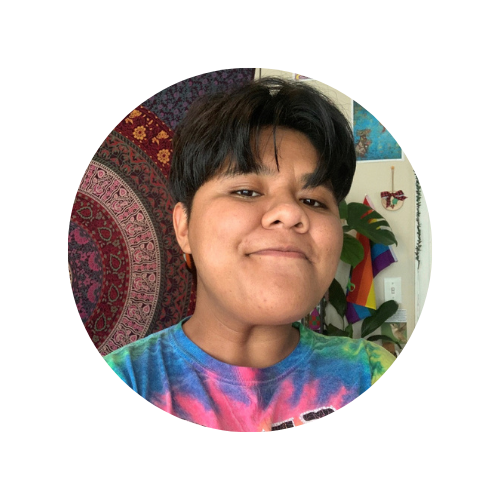
Hilary Cruz Mejia (she/her/ella) is a Latinx poet and activist from the coastal waters of Guatemala. Her work has appeared in MiGoZine (an imprint of Paloma Press), Portside Magazine, and in the Lesbians Are Miracles Magazine. Hilary’s transition to the U.S. as a lesbian, immigrant, and first-generation college student has been presented in her poetry where she hopes to encourage her readers to preserve the indigenous roots of the lands that were stolen. Outside of writing, she spends her time baking bagels and keeping on track with her homework. Hilary featured in readings hosted by the San Mateo County Office of Community Affairs and Redwood City Public Library. Follow her on Instagram @hilary_natasha. 

Poem on Belonging

Esta noche sueño con dormir en los brazos de mi abuela, pero ayer ella preparó té para curarme el corazón.

quiero caer del cielo
—como las lágrimas que bañan nuestros ríos
sueño con recoger flores de sus manos
—como las heridas que le han xmarcado el rostro
dejándola poco a poco saborear el chocolate agridulce casero

—un trozo de jade que refleja la luz que
viene después de una tormenta de invierno tropical
en nuestra casa.

Tonight, I dream of sleeping in my abuela’s arms, but yesterday she prepared tea to heal my heart.

i want to fall from the sky
—like the tears that bathe our rivers
i dream of picking up flowers from her hands
—like the wounds that have marked her face
slowly letting her taste bittersweet homemade chocolate

—a piece of jade reflecting the light
that comes after a tropical winter storm
in our home.

Copyright © 2022 by Hilary Cruz Mejia. Used with permission of the author.

Peter Neil Carroll

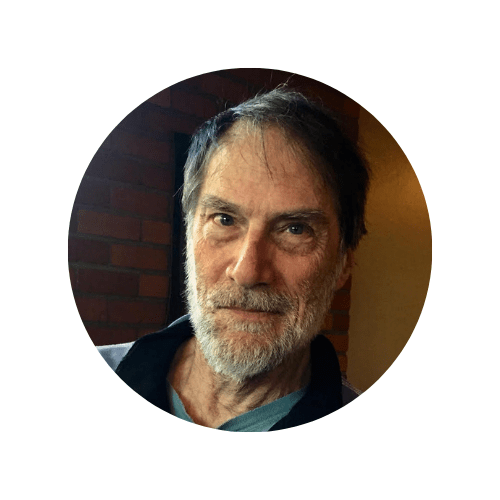
Peter Neil Carroll is an American writer and historian. He is the author of over 20 books, including Sketches from Spain (Main Street Rag, 2024), a lyric homage to the volunteers of the Lincoln Brigade, which was nominated for a Pulitzer Prize; Talking to Strangers (Turning Point Press, 2022); This Land, These People: 50 States of the Nation (Press Americana, 2022), winner of the Prize Americana; Something is Bound to Break (Main Street Rag, 2019); Fracking DakotaPoems for a Wounded Land (Turning Point, 2015); The Odyssey of the Abraham Lincoln Brigade: Americans in the Spanish Civil War (Stanford University Press, 1994), winner of the 1995 BABRA Nonfiction Award; and the memoir Keeping Time: Memory, Nostalgia, and the Art of History (University of Georgia Press, 1990). He is emeritus faculty in the Department of History at Stanford University, and is Poetry Moderator of Portside.

On September 16, 2024, after a brief illness, Peter passed away at the age of 80 surrounded by his family.

Ecopoems

APPALACHIA

The man at the river
with watery blue eyes tells me
how to find everything
he’s lost. Scratchy voiced, pointing
a crusty finger
like a needle knitting
through thickets,
he weaves the route:

first to Cousin Jack’s barn
near the yard where the collie sleeps
and across a narrow bridge
by the broken white fence
where Dave’s truck flew off
leaving his Jeannie
and the two baby girls. Turn
at the gray-stone post office.
Can’t miss it. Just opposite
Frank’s busted Ford that needs a motor,
he’s waiting for the government check.
Now if you see the church, fresh-
painted white, you’ve gone too far.
Turn back in Sharon’s drive,
she don’t ever mind, her boys
left these parts years ago.

Stories hang here, ghost-sheets
over the depleted woods. I stop
in a clearing to look at leaves fluttering,
swirling off sycamore, hickory, oak—
the way a child turns back to wave—
the mountain stripped at the ridge.

Copyright © 2012 by Peter Neil Carroll. This poem originally appeared in A Child Turns Back to Wave: Poetry of Lost Places (Hollywood: Poetry Press of Press Americana, 2012). Winner of the Prize Americana. Used with permission of the author.

THE MOUNTAIN TOP

Kayford, West Virginia

The mountain man points across a half-mile gap
to a hill where silver leaves shiver in strong gusts,
to family graves, centuries old, unreachable
without permission from the coal company.

Coal keeps the lights on, the company brags.
On in the funeral parlor, the mountain man says,
inviting me to visit what’s left of his hill since
the last dragline shovel devoured Appalachia.

Face smudged, boots soaked in sludge,
the old coal miner still hoists hammer
and pick to a rocky ledge, sets charges,
chokes on dust, coughs blood, dies hard.

And now comes the behemoth, ten stories high:
with a button’s push it swallows the mountain,
each bite 50,000 tons of sandstone and root,
heaves its maw into the hollows below.

Soil, forest, whatever’s above the black seams,
the company calls waste or overburden.
Inside the shovel the word is spoil, and once
the river’s sunk, fish killed, they speak of fill.

Taking the miner out of mining means 8 billion
pounds of explosives; 800 million acres
of forest; 500 mountains collapsed—leaving
behind yellow-painted signs saying,

HAZARD
DO NOT EAT BASS
BEYOND THIS POINT

Copyright © 2022 by Peter Neil Carroll. Used with permission of the author.

Read Peter Neil Carroll’s poem, “Borscht.”

Find Peter’s books at the library!

This Land, These People (2022)
The Odyssey of the Abraham Lincoln Brigade (1994)
Keeping Time: Memory, Nostalgia, and the Art of History (1990)

Housing Leadership Council

In 2020, the Housing Leadership Council of San Mateo County in collaboration with San Mateo County Poet Laureate Aileen Cassinetto launched the first countywide Youth Poetry & Art Competition to encourage young people to explore their notion of home and to raise awareness of Affordable Housing Month. Given the continuing housing crisis in the Bay Area, this project is critical in bringing young people into the broader conversation of building healthy communities which includes access to adequate and affordable housing for everyone.

The theme in 2020 was “Home Could Be Here”; in 2021, the theme was “Growing Home” based on the 2020 winning poem by Abigale Wee. This project is aimed at empowering youth and supporting housing justice.

Watch “Growing Home” 2021 Youth Poetry & Art Competition, presented as part of the Housing Leadership Council of San Mateo County’s Affordable Housing Month program

Speak Poetry Anthology, Vol. 1

From the introduction to Speak Poetry Vol. 1:

When I was appointed Poet Laureate of San Mateo County, I was tasked with creating a poetry campaign to bridge and engage communities through the literary arts. My project, titled, “Speak Poetry,” is an ongoing conversation, where we’re given the opportunity to get to know people and the rhythm of their everyday lives.

Our county is singularly diverse, in terms of its geography and its demographics. And in this landscape, we have the space to bring to the fore the individual voices which make up our community. This anthology features 23 poets from around San Mateo County, ages 13-78, as they reflect on community—how they perceive it and/or themselves in it.

As an immigrant, I came to America with a luggage overpacked with poems and the unshakable conviction that I can be a poet here. I learned the most important lessons from being part of a community, that is, to be a poet is to help build, gather, restore. It’s about hope, that great unifier, which transforms lives, which fortifies communities, which changes the world.

Aileen Cassinetto

Joe Cottonwood

Joe has balanced his life as a home improvement contractor by day, author by night. He is from Maryland, imprinted Appalachian, educated midwestern, settled half a century under redwoods in La Honda, California. Joe is widely published around the world. Recently one of his poems was on display as a giant billboard in London, England. His latest book of poetry is Random Saints. Previous poetry books include Foggy Dog: Poems of the Pacific Coast. He is the author of many popular novels for adults and children and the award-winning memoir 99 Jobs: Blood Sweat and Houses.

Poem on Belonging

I AM

I am from Sibley Hospital 
in Washington DC where
my mother bought me 
like military surplus
at the end of World War Two.
I found the receipt 
she’d saved for decades 
in a dusty drawer
that made me sneeze:
“Delivery (normal) $48” 
stamped PAID.

I am from B&O coal cars
pennies on the track
under rivers of black
as mountains were removed.

I am dust from hitchhiker’s thumb
blown from Appalachian lowland
to the foggy redwoods of California.

I safekeep my pennies with
a left-handed banker of curly black hair
who returns with compound interest
child and grandchild, again, again.

I am from lapping tongue of dog,
many whiskers, one spirit.

I am from the dripping faucet
the rot of old wood.
Call me, I’ll repair.

I am from stories
I can’t stop telling
words I can’t stop writing
including my own receipt:
“Exit (normal). No charge.”
Past due.

Copyright © 2022 by Joe Cottonwood. Used with permission of the author.

Find Joe’s books in the library!

San Mateo County Libraries

Civic Engagement

Co-Founder, La Honda Lit Nite

“If you’re driving Highway 84 and see this sign by the side of the road, it’s Lit Nite in La Honda, California. Once a month, locals gather out of the redwood forest into Sullivan’s Pub to read or recite before a live, friendly, and somewhat lubricated audience in the bar. Participants include building contractors, a gardener, a veterinarian, a high school student, a goat farmer, a singer, a teacher, a nuclear physicist, dropouts, published writers. They read from their own work, or they read from books. They read poetry, stories, rants, even a comic book. The event is hosted by myself (unknown novelist) and Terry Adams (unknown poet). We’ve been doing it for a couple of years now, last Wednesday of the month. It’s fun; it’s friendly; it brings us together; it lets us try out our voices and our ideas. It brings literature down to earth.”

—Joe Cottonwood, quoted in The New Yorker

Speak Poetry Anthology, Vol. 2

From the introduction to Speak Poetry, Vol. 2:

We are the language(s) we learned, the dragons we slayed, the monsters we defeated, the “gods we created”—we are all of our stories and every story read to us. We are also everything that we have forgotten. For this anthology, I’ve sent out a call to all poets in San Mateo County to submit poems on the theme, “childhood.” One reason is, to quote Robert Pinsky, to seek a vision of our future in the poetry of our past…”

According to a California Department of Finance study, there are 163,129 children between the ages of 0 and 17 in San Mateo County. If more than 57% are living with at least one foreign-born parent, how does a village support cultural literacy? What role can poetry play in a multilingual household? If more than 15% come from lower income families, or if more than 2% are homeless, how can our communities help in ensuring their future economic mobility? What possibilities can poetry possibly offer? More importantly, how does poetry change a life? From the 24 local poets featured in this anthology, it is my hope that we gain a deeper understanding of what childhood is, as well as everything that it can be.

Aileen Cassinetto

Stephanie Dobler Cerra

Stephanie Dobler Cerra is a general writer at Accenture, supporting Google. She has a master’s degree in literature from Indiana University, specializing in Victorian Studies. Her poem, “Photograph of a Minamata Disease Victim,” appeared in The Pennsylvania Review (1986).

Poem

ORACLE

Dad out of state for work, mom got spooky
Shuffling her Tarot cards, gazing at the layouts
Pouring glass after glass from the big Gallo jug.

Crossing the unlighted living room I’d see her
Hunched over the Ouija board, planchette roaming
Mystifying Oracle, mother unfathomable.

At the dinner table she ignored us, lost somewhere
And trying to stay lost in her constant gloaming
Slapping our words away like biting insects.

Mystifying Oracle, we could have used you
Please explain our mother to us and where she went
Is she coming back? YES, NO, GOOD BYE?

We didn’t know how to ask her, or the Oracle, or anyone.
The family’s first rule for children: Don’t ask for anything.
What did we know of what our mother wanted?

She was a year away from writing poetry again.
I wonder if the planchette spelled that out for her
Or if it just left her, as we were left, in the dark.

That wasn’t right, but I can almost understand—
Now that poetry’s taken me by the wrist to the cleft
In the muse’s cave where heady vapors fume.

Now I wish we could join in this dimness
Our fingers delicately spread, my mother and I,
Scrying for what living rock can yield: Smoke. Water. Honey.

Copyright © 2019 by Stephanie Dobler Cerra. This poem originally appeared in Speak Poetry Vol. 2. Used with permission of the author.

Louis Castoria

Louis Castoria has been a volunteer journalist for over 20 years while maintaining his full-time employment as a partner in two sequential law firms. He served for twelve years on a nonprofit’s (Insurance Educational Association) Board, six of them as Chair. He is a 1976 graduate of the University of San Francisco (Valedictorian, Student Body President, and Editor-in-Chief of the USF Foghorn newspaper). His legal training was at Boalt Hall School of Law, University of California at Berkeley (J.D. 1980). He is the founder of Coastal Literary Arts Movement and co-founder of Make It Main Street.

Poem

A VISIT FROM SAGITTARIUS

’Twas the night before Christmas, when here by the sea not a creature was stirring, except maybe me. Slumber escaped me, so deeply in thought: “Does Christmas have meaning? Is all this for naught?

“The cards and the presents, the stockings, the lights; they all seem so cheery, but also so trite. The world’s full of turmoil and hatred and danger. Is there room in our hearts for the child in the manger?”

When from the front yard came a boom just like thunder. I sprang from the bed and saw, to my wonder, one-seater spaceship and its little green pilot, who just stood there shivering; his ears turning violet.

“Excuse the intrusion,” he said with a bow, “But I’m cold and I’m hungry, and became lost somehow.” I brought the chap in, and, lest he expire, I served him some green chile stew by the fire.

And when he had eaten he asked, “I assume there’s a reason you have a big tree in this room?” I said, “Cause it’s Christmas. We do it this way. We yearly give presents and have a feast day.”

He seemed more perplexed. “But you haven’t said why.” “It’s simple, yet complex,” I said with a sigh. “A long time ago in a land far away, someone gave a gift to all people, they say. It wasn’t a package, a box or a gift bag. It didn’t have wrapping, a card or a price tag. And many believe, though you may think it odd, that the gift was so great that the giver was God, who gave us a present beyond any worth: quite simply, the secret to have Peace on Earth.”

“On Earth? Is that all?” asked my little green guest. “Just one tiny planet? Will it work for the rest? We also have fighting and killing, you see. Will this secret help little green people like me?”

It was a tough question. I paused to consider. Is Christmas just Santa and shopping and glitter? “I guess that depends what you do with it, friend. We’ve not done too well, so don’t follow our trend. In 2,000 years we’ve not gotten it right. We fight and we lie as we sing ‘Silent Night.’ Our people have strayed, and I say this with shame, that we’ve even fought wars in the gift-giver’s name.

“But you may do better if you apprehend it, so I’ll share the gift freely, as the giver intended. He sacrificed all to teach us what to do: ‘Love one another, as I have loved you.’”

“That sounds very simple,” the spacer replied. “Can that really work? Has it ever been tried?” I said, “Yes, it has, and here is the key: ask “How may I help?” not “What’s in it for me?”

We talked for a while, then he had to be going. He plotted his course and his ship began glowing. He said, “Thanks for the food and for sharing the gift. I’ve much to consider,” as the ship started to lift.

But I heard him exclaim as he rose in the air, “Happy Christmas to all! And spread Peace everywhere.”

Copyright © by Louis Castoria. Used with permission of the author.

Civic Engagement

Founder, Coastal Literary Arts Movement, a nonprofit, public benefit corporation based in Half Moon Bay, California whose purpose is to foster a wide variety of literary endeavors, including local reporting, authorship, theater, film, student journalism and most any other verbal expression.

Jo Carpignano

Josephine Carpignano, 85, retired educational psychologist, lives in San Mateo, California. In 2011 she won the National Senior Poet Honor Scroll Award with her chilling poem “The Yellow Bus.” She is a member of the SF/Peninsula Branch of the California Writers Club. Jo is author of the self-published book Madeline’s Story about her immigrant mother, a member of an Italian family, who came to San Francisco after the 1906 earthquake. Dr. Carpignano’s writing credits also include awards for both prose and poetry, as well as publication of magazine articles and chapters in professional books.