Dorsetta Hale

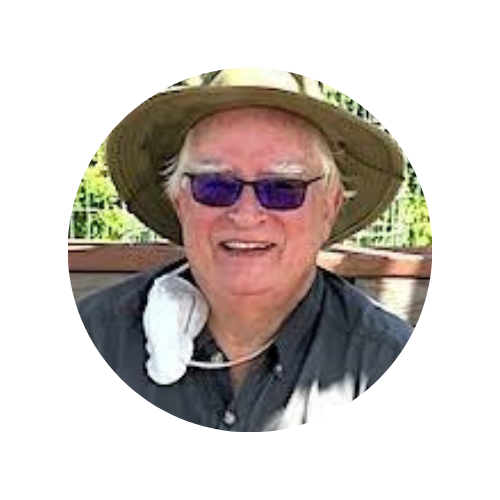
Appointed Pacifica Poet Laureate from 2014-2017, Dorsetta Hale launched the “Poems on the Devil’s Slide Ride” program featuring printed poems by selected Bay Area poets, in partnership with the City of Pacifica, Pacifica Chamber of Commerce and Visitors Center and the San Mateo County Transportation Authority. She wrote and read her poetry for CORA (Community Overcoming Relationship Abuse) for their various events, and provided presentations throughout the community, including schools, libraries and events. Dorsetta featured in the Bay Area Poets Laureate Reading co-hosted by the San Mateo County Poets Laureate, San Mateo County Arts Commission, and the San Mateo County Libraries.

Poem on Belonging

KEYBOARD PLAYERS

My sugar man
turns raw
golden brown
when the sun
shines hot
Hair
dark as my skin
I miss his thin lips
whenever he grins

Forgive me forefathers
I knew not what to do
I didn’t see his color
when he said the words
I love you

Copyright © 2022 by Dorsetta Hale. Used with permission of the author.
Poet Laureate Project

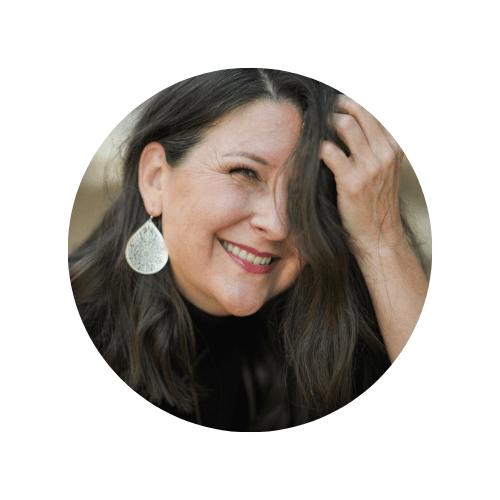
Appointed by the Council of the City of Pacifica, Dorsetta Hale served as Poet Laureate from 2014 to 2017.

Dorsetta’s community project, “Poems on the Devil’s Slide Ride,” featured printed poems by selected Bay Area poets, in partnership with the City of Pacifica, Pacifica Chamber of Commerce and Visitors Center, and the San Mateo County Transportation Authority.

Jacki Rigoni

Jacki Rigoni is the author of Seven Skirts from Paloma Press. She lives with her three children in the San Francisco Bay Area, where she served as Poet Laureate of Belmont, California from 2018 to 2021. She has a master’s degree in English from the University of California, Berkeley, and is a credentialed teacher. A finalist for the 2018 Francine Ringold Awards for New Writers, her poems appear in Nimrod International Journal, Moon City Review, Migozine, anthologies, and permanent public art installations. Jacki writes on her site WomanUprising.com and facilitates courses for women at WomanU.com.

Poem on Belonging

LAST DAY OF SCHOOL

Behind beachsand bricks,
beside the corner downspout,
I stood honor guard
in the ceremony of the peonies.

In an aura of soon-summer,
scented rose-ish and curly,
Mom clipped
fat blush blooms
with their frantic black ants,
wrapped them
in damp paper towels
and tin foil,
presented them
to my almost-second-grade hands,
before the first
come out, come out
wherever you are,

when playdate
wasn’t yet a word,
but an unscheduled world
on the other side
of a doorbell,
teeming with neighbor kids,
sprinklers and crayfish,
caterpillars, dirty feet, scabs,
whiffle ball, black-eyed susans,
Queen Anne’s lace,

until barbecued chicken
or bug spray or bedtime
called for us, one by one,
wild entourage of the peonies.

Copyright © 2019 by Jacki Rigoni. Used with permission of the author.

Find Jacki’s books in the library!

Seven Skirts (2021)

Poet Laureate Projects

Appointed by the Council of the City of Belmont in 2018, Jacki Rigoni served as Belmont Poet Laureate through 2021.

Curator, Belmont Poetry Night reading series and open mic

Founder, “Poetry Walk” in collaboration with Belmont Parks & Recreation and Friends of the Belmont Library, an installation of permanent poetry signs featuring past and present poets laureate

Founder, “Holiday Poetry & Caroling”

Curator, “19 Women Poets on the Centennial of the 19th Amendment,” where 19 poets added a line to a 19th Amendment crowdsourced poem.

Lisa Rosenberg

Poet and recovering engineer Lisa Rosenberg is the author of A Different Physics, winner of the Red Mountain Poetry Prize. The recipient of a Wallace Stegner Fellowship, MOSAIC America Fellowship, and Djerassi Residency, she served as Poet Laureate of San Mateo County, California, and is a frequent speaker on the confluence of arts and sciences. Her work appears in journals and anthologies including POETRY, The Threepenny Review, Southwest Review, Ruminate, The London Reader, The Curator, and California Fire & Water: A Climate Crisis Anthology.

Poem on Belonging

LESSONS (from “FLIGHT”)

I was born an eldest son.
Before I could read
my apprenticeship began

in crafting, by machine
and by hand, the tools
of flight. Engines tended,

tuned like bells across
my father’s workshop.
When I was ten we cut

the first long ribs
for his first real airplane.
By its completion I had

breasts and soft hips.
The fuselage wore fine spruce,
the wings fleshed out

over rods and spars
and they weighed on me.
I helped to rig them,

to stitch and smooth
a skin of faultless silk
as all around us

notes of solder and epoxy,
of lanolin and gasoline
infused our hair, our clothes,

and settled on the spines
of metal parts in bins.
I chose to follow him.

Flying the middle course.
Setting out. And fearing—
not the frailty of mechanisms,

but an old fear
of failing. Of everything
except the spectacle of Earth

above my head, and sky
below, inverted by
my own hand at the yoke.

Copyright © 2018 by Lisa Rosenberg. This poem originally appeared in A Different Physics (Red Mountain Press). Used with permission of the author.

Find Lisa’s books in the library!

A Different Physics (2018)

Poet Laureate Projects

Appointed by the County of San Mateo Board of Supervisors, Lisa Rosenberg served as Poet Laureate of San Mateo County from January 2017 through December 2018. Projects include:

First Tuesday Poets Night, a monthly community poetry event, normally held at Café Zoë in Menlo Park, currently meeting online.

Spoken Art (2017-2018), a county-wide ekphrastic challenge that showcased local artwork in several media which received hundreds of original poems from writers of all ages.

SUMMARY OF ARTWORK

“A quick stop in any coastside or bayside gallery gives us a hint of the amazing array of artists we have in San Mateo County. It struck me that an ekphrastic project would be a great way to include visual artists in my charter of increasing opportunities for county residents to create and share poetry.”

Lisa Rosenberg

Diquan Richard

Diquan Richard is a Bay Area Native who is currently getting his master’s in Education, Equity and Social Justice at San Francisco State University. Since the age of 13, Diquan has always had a passion to express himself creatively through his art, music, poetry, and his global humanitarian work. He has dreams of gaining employment at Pixar Animation Studios as a computer animator. 

Poem on Belonging

CAN YOU BE LOVED?

Can you love
me even though
I’m different?

Can you see past
my imperfections
no matter how
displeasing they
may be?

Can you love
yourself enough
to know that I
Love you for who
You are and not
what you look like?

Can You Be Loved?

Copyright © 2020 by Diquan Richard. Used with permission of the author.

Coco Peezy

Coco Peezy has been reading and writing poetry since 7th grade. By day she is a high school English teacher in San Mateo County. In her free time, she is usually surfing or hiking with her dog, Huckleberry. For more of her poetry, you can find her first book, Coastal, anywhere books are sold. 

Poems on Belonging

BECOMING

Haven’t I been whole
          for awhile now?
Then again,
how could I be
when I’m constantly
giving parts of myself
          to people who walk away.

Your time comes
and sometimes
          it goes—
So isn’t this all
          a becoming?

Like the moon
working through her phases—
          Only to be full once a month,
like the Sun rising and setting—
          She can’t shine all day,
like the flower who opens and closes—
          She too needs rest.

Aren’t we all merely rotating like Earth,
expanding like the Universe,
spreading our roots like the trees,
filling and emptying ourselves
like the tide?

There is nowhere to grow
if we reach it all at once.

Copyright © 2018 by Coco Peezy. Used with permission of the author.

HAPPY PILLS

Courage is
staying awake
for two months
and making it
out of bed
each day.

Strength is
not succumbing
to your own mind.

Meditating morning
and night
to realize
that you are
a loving,
breathing
animal.

Softening besides
the ocean;
having no energy
to go in.

Taking the bottle
of happy pills
from an outreached hand:
theirs, yours, mine.

How your “normal”
was said to be unusual,
and happiness
felt abstract;
foreign to your
heavy body,
which now
                    floats.

Copyright © 2018 by Coco Peezy. Used with permission of the author.

A COURSE OF HEALING

Off-balance?
Align yourself
          with the stars.
What gives you tingles?
No one can answer
          your happiness.

Drown out your spirit
          with fear;
keep sinking
until your intuition
          recovers you.

Search for apologies
          you will never receive—
Settle with forgiving.

Compare yourself
into despair;
emerge from it.
You won’t know
what you’re made of
          until it’s been challenged.

Patience in wanting
and waiting—
Sun pokes through
the dark clouds:
here is the feeling
          you stuck around for.

Surrender to something
          bigger—
Putting my pen to paper:
          this is how I pray.

Copyright © 2018 by Coco Peezy. Used with permission of the author.

Carol Park

Carol Park grew up in Redwood City, and though her specific jobs have ranged, they’ve always included words, teaching and nurturing of people. Six of her adult life took place in Japan where she mothered two young children, taught ESL, and learned much from Japanese friends. After the kids grew up, she earned her Masters in Creative Writing from Seattle Pacific and devoted time to fiction and poetry. Find her poems in SLANTMinerva RisingBlack Fox Literary Review, and several anthologies. She’s currently finishing a novel set in Tokyo. Read her fiction at carolpark.us.

Poem on Belonging

OF OKLAHOMA AND BAVARIA

My parents were born to farmers. 
My mom’s sole toy a ball
in Delhi, Oklahoma. She picked cotton
along with her mother and brothers.
Her father, postman and preacher, rode in 1919 
and never returned. Probably crossing a river or
the epidemic of flu overwhelmed him.

Mom’s parents sharecropped. Dad’s folks
owned their land. Still, snow lay atop his bed
of a morning—that’s what he often said—
and told of trekking to school with a hole in his shoe.
He looked to education for his salvation.
WWII took the young couple east. Later they went west.
Visalia, California, my birthplace, but, from year two to 
eighteen, in Redwood City was my school and play.
Dad taught at Cañada college. On days off,
he mowed the lawn, pruned trees
or harvested plums & apricots. I picked the fallen,
and cut fruit for canning for Mom. Weekly I scrubbed
the kitchen floor on my knees. I got a quarter!

A hose for the car, broom for the porch, vacuuming 
twice a week, changing sheets weekly—cleaning 
an all-day, mother and daughters, Saturday occupation. 
Some fastidious ways I’ve kept, others I’ve dropped.
Family fun back then? Swimming, camping, or kin.
Dining out, fast food or movies rare treats. Trips 
to grandfolks in LA many a time—Disneyland once. 
But I smiled big when Grandpa danced the jig.

Just past thirty, I kissed and wed a Honolulu man 
(Korean descent). Teaching my passion, tech my man’s. 
Scent of cookies & bread enlivened our home—like mom’s—
and nurture of apricots, camelias and geraniums.
My husband and I played Uno with our kids. We four ran
from waves oceanside & walked under oaks. Dipped in
Yosemite’s rivers and hiked its granite mountains. 
Kids gone, I traveled to where window sills
boast boxes of geraniums, colored garnet and rose. 
Bavaria!

German names ripe on my family tree. Six generations ago 
my kin wagered on more land & liberty, and boarded boats 
to a new continent. Muller, Blumb, Zwerger, and Jager—
forebearers to my Yaeger. I searched the German south
for tiny Apfeldorf—there! 
Scratched on a tombstone Muller, a familial name. 
Did a kinsman here write stories, or of fears and aches?

Like what I found in Bavaria, my parents kept pristine yards
but they decried the amber fizz in stein or tall glass—
teetotalers of Baptist persuasion.
Me? I’ve slid to Episcopalian liberalities.

I explored the castle that King Ludwig of Bavaria built, 
and found his son Crown Prince Rupert infuriated Hitler, 
The aspiring demagogue promised restoration of Bavarian monarchy
through his Munich Beer Hall Coup. Rupert refused 
such kingship. Illicit force he rejected. Police put down 
stormtroopers and Hitler went to prison—out a year later.
Rupert named him insane and strived to halt
the conniver’s ascendance. In a decade plus though 
Hitler’s powers grew large, and he seized Rupert’s house.
He escaped to Italy. Did Florentines grow 
geraniums? Blooms of endurance and hope?
Rupert died at age 75, a match to the year I was born.

My kin of the Golden State embrace lies
and vote for demagogue politics.
Who parts from their ancestry?
Not me. 
When I waved adieu to the family camp,
new and kinder kin came round me. Now
in light as warm as Bavarian summer,
I tend geraniums & trees
and honor Rupert.

Copyright © 2022 by Carol Park. Used with permission of the author.

Dina Klarisse

Dina Klarisse (she/her) is a writer, poet, editor, and serial procrastinator based in the San Francisco Bay Area. Poetry is her way of making sense of her experience as a queer Filipina American immigrant and recovering Catholic, as well as her interest in the intersections of history, language, culture, and identity. Her work has been published in ASU’s Canyon Voices, The Daily Drunk Mag, Chopsticks Alley, and Kalopsia Literary Journal, among others. She serves as Poetry & Issue Editor for the online literary magazine Marías at Sampaguitas, as well as Editorial Director for the indie micropress, Sampaguita Press. Her debut chapbook, Handspun Rosaries, was released in 2022. 

Poem on Belonging

INGAT

Ingat
sings the chorus
at the very edge of security check,
as close as can be to their travelers.
Mothers and children and co-nurses
wiping tears as a loved one slips away
across the glass barrier to another place.

Ingat
my mother tells me, Take care,
since I was old enough to listen.
And in the white-hot rage of youth I shook it off,
for to take care meant to take what was handed
and given and forced onto me from my first breath:

A forever tether to the voice and arms that held me,
from which I tried to run in search of freedom.

And it was my first act of independence
to forget their ingat and live outside
the safety and restrictions,
brimming over with expectations
of who I should be and should have been.

And in running and hiding I forgot to check
the corners of ingat, wherein hides love and safety:

A calling to travelers that their home is still home,
despite the neon lights of that world out there.

My eyes grew weary of the neon lights and I turned
back to that place that still echoes their calls.

I didn’t seem to notice that I am an object in orbit,
still tethered but now distanced from what is always
and has always been home.

And like a roundtrip ticket I grasp to gravity,
the pull that keeps me in their sight, still far
but close enough to hear.

I find myself saying it back, calling out
to the chorus at the center of it all.

Ingat, I sing in harmony, to my mother and father
and brothers and cousins and aunties and uncles:

The concentric circles tethered
by a prayer or mantra or shout to the void

to take care, and to come back one day.

Copyright © 2021 by Dina Klarisse. This poem originally appeared in Marías at Sampaguitas Magazine Issue No. 2. Used with permission of the author.

Roberta Gonzales-Gregg

Roberta Gonzales-Gregg is a Southern California native and Bay Area transplant of 28 years. She is a Co-Host/Co-Producer at Outlook Video, an LGBTQ public access cable TV show. She is also a Senior Peer Counselor at Peninsula Family Service, and Group Facilitator for “Let’s Talk” Zoom Chat. An avid walker/hiker, she discovered writing poems in her senior years of which two have been published in the San Francisco Chronicle.

Poem on Belonging

ELDER WISDOM

Is it true that we become wise as we get older?
That it is we Seniors who must offer a shoulder?
A shoulder to lean on when challenged in life,
A few words of wisdom to handle the strife?

It’s often I find that yes, I am aging, but continue in learning,
And finding conditions of life which keep me yearning.
Yearning to know NOW what lies ahead and beyond,
To embrace the joys of that which I am fond.
But also to remember and acknowledge
Those who came before me, to glean from THEIR knowledge.

Our ancestors traveled through hardships into the unknown,
To build community, though no blueprints were shown!
They used the wisdom handed down
From their Elders to Youngers
They persevered and stayed strong.

I am now in deep, pensive thought,
And pray that this passed-on knowledge isn’t for naught.
For as I age, I hope never to fear
That this acquired knowledge and love
Will always be held ever-so-dear.

Copyright © 2022 by Roberta Gonzales-Gregg. Used with permission of the author.

Civic Engagement

Senior Peer Counselor & Group Facilitator at the Peninsula Family Service, an organization founded in 1950 which provides comprehensive services that support individuals and families at various stages of life.

Tony Press

Tony Press tries to pay attention and sometimes he does. He enjoys reading and writing, whether poetry or fiction, and has had both published in many fine places. He’d be thrilled if you purchased his 2016 story collection, Crossing the Lines (Big Table). It’s available via independent bookstores, directly from him, or even from that Amazon place. He lives near the San Francisco Bay and has two Pushcart nominations, yet not one website.

Poems on Belonging

ON MORI POINT

Surfboards on a fence
the sea is calm today
and thus, so are we

We sit, backs cradled by the bench
and talk of tonight, and tomorrow,
but not of yesterday

We are not ready
to speak of yesterday

Copyright © by Tony Press. This poem originally appeared in Trailer Park Quarterly. Used with permission of the author.

NOT FAR AT ALL

In my little town it is only just
around the corner
from the teen club on San Bruno
to the senior center on Visitación.

Copyright © by Tony Press. This poem originally appeared in One Sentence Poems. Used with permission of the author.

COLMA WALK

We walked by the graveyard today
Father’s Day
And saw a group of five, sitting on the grass,
On blankets, and wrapped, too, in blankets, this breezy Sunday.
Each person sitting within three or four yards of the same tombstone

We continued walking
Father’s Day
The five appeared, though we could not say for certain
Appeared to be a family
Perhaps a mother and four children, two of them in their twenties,
Two younger

But perhaps not, perhaps a mother-grandmother, her child, her child’s spouse
And two children.
Or not, to be sure, for it could have been five friends, companions, aunts, uncles
We had no way to know, and no need
This Father’s Day

We walked on, reached the corner, debated quickly:
“Shall we do the whole path, or just go back toward the mountain?”
We chose the shorter way, turned around, and began the uphill route.
Except for the group of five, we had seen exactly two people, both groundskeepers,
(one raking, one driving a green cart), those two, plus six squirrels
Six squirrels and two large crows

Approaching the group, we saw them now standing, circling the grave
Standing and holding hands.
We could not yet hear, but wondered if they were praying, as we could
See lips moving, bodies swaying.
We kept walking – it’s what we do.

Closer still, we realized they were singing, singing quite well, in fact,
Without a boombox or any musical instrument, just their voices
Carrying down the slope toward our waiting ears
At first, we both thought we recognized the song, and whispered the title
To each other – the same title – but almost as quickly knew we were wrong

We did not know this song, our hearts told us, but we wanted to, so we sat,
Sat on a bench a mere twenty yards from the singers.
If they noticed us, they made no sign. They sang.
They sang, we listened. They sang, we marveled, and we wondered.
They sang, we listened, we held hands – held hands before we knew we were holding hands.

We had come to the cemetery to walk, to talk a little, to be by each other’s side
We had come this Father’s Day to remember our fathers.
We had come to this place
This place neither city nor country,
This place for the living
This place for the dead
This place like no other place,
This place no different from any other place.
All places the same place.

This place.
This Father’s Day.
This group singing this song
A song we did not know
Yet would never forget

A song we did not know
Yet would never forget

Copyright © by Tony Press. This poem originally appeared in Digging Through the Fat. Used with permission of the author.

Find Tony’s book in the library!

Crossing the Lines (2016)

Civic Engagement

Tony was part of Immigrants Rising’s Educator Action Group from 2010 to 2012, and has edited numerous publications, served as a mentor to students, and been a supporter ever since.

Mia Ayumi Malhotra

Mia Ayumi Malhotra is the author of Notes from the Birth Year, winner of the Bateau Press BOOM Chapbook Contest, and Isako Isako, a California Book Award finalist and winner of the Alice James Award, the Nautilus Gold Award, a National Indie Excellence Award, and a Maine Literary Award. She is the recipient of the Hawker Prize for Southeast Asian Poetry and the Singapore Poetry Prize, and her poems have been published in numerous journals and anthologies, including The Yale Review, Indiana Review, and The World I Leave You: Asian American Poets on Faith and Spirit. She teaches and lives in San Mateo County.

Poem on Belonging

SHELTERING
                     with lines by Louise Glück

Ready or not, here we are. We’ve been lost and found,
            gone underground. We’ve raised cardboard cities,
pounded owers to pulp. Danced like seeds, sprouting.
            We’ve been Stuck in the Mud, traced ourselves
in chalk, watched our bodies turn to brilliant dust.
            Around us, the death toll rises. Something comes
into the world calling disorder, disorder—

            Ordered home, we’re baking. You peer
into the oven. I don’t know how much longer, I say—
            lost, too, in this interminable landscape.
Somewhere in the desert, my great-grandfather lifts
            a stone from a dry creek bed. Sui meaning water,
seki meaning stone—suiseki as in viewing stones,
            naturally formed. For days, he contemplates
its dimensions. A desolate island, perhaps—blueprint
            of some past or future grief.
How many times have we made life from dust?
            First strawberries, then carnations. Roses,
by trial and error. Unearthed, we’ve found the white
            of bones, wet of saliva, sound of singing—
at the end of my suffering there was a door.
            One day we will reenter the house of the living.
A local store texts: OPEN NOW! FACE MASKS
            AND GLOVES FOR SALE! You chant rhymes,
write your name for the first time. You’re learning
            the names of things. Yeast. Virus. Oxalis.
You call it the pandemonium. Enculturation,
            they say, bringing a child into language—
from raw and unformed to browned. Friday,
            we knead dough. Monday, you push stones
into place, form the letters “Y,” “X.” We touch
            the rough, chiseled edges. Count the days.
Outside, fever rages. It’s spring again. You pick
            wild irises with gold veins, bellowers
with red and yellow striations. Your bodies—
            so beloved, sometimes I mistake one
for the other—climb into bed beside me.
            The hours stretch. Dusk lengthens over the trees.
From my window, I can see the neighbors’ lit A-frame.
            I was once afraid—I still am, but every night
the sun sets, and in the gloaming, a star—or is it
            the light from a plane—blinks on—

Copyright © 2020 by Mia Ayumi Malhotra. This poem originally appeared in MiGoZine Winter 2020. Used with permission of the author.

Find Mia’s book in the library!

Isako Isako (2018)